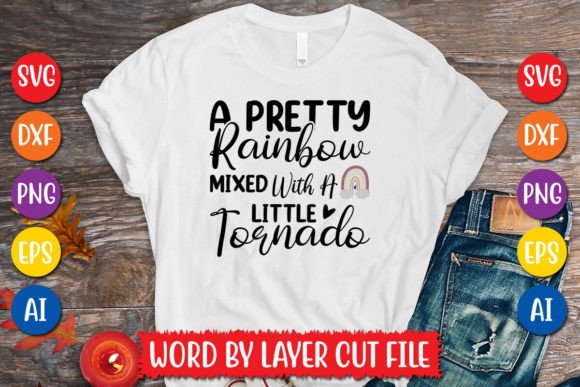
A Pretty Rainbow Mixed with a Little Tornado: A Designer's Review
Every embroidery designer knows the moment: you find a new file, load it into your software, and try to picture it stitched out on fabric. It’s not about the digital preview; it’s about imagining the threads, the texture, the finished piece in a client's hands. That’s the lens I’m using to look at A Pretty Rainbow Mixed with a Little Tornado. This isn't a spec sheet; it's a practical judgment of how this design performs in the real world of hoop, needle, and thread.
First Impressions: Whimsy Meets Rebellion
The mood here is instantly charming yet subtly defiant. It’s not a standard, serene rainbow. Mixing it with a little tornado introduces a playful twist—a visual personality that feels both cheerful and spunky. The layout likely balances these two iconic shapes, creating a dynamic composition. For an embroidery project, this suggests a design that belongs on items meant to spark a smile or convey a unique character. Think personalized gifts for someone with a bright but strong personality, or boutique products aiming to stand out from generic, mass-produced graphics.
The Real-Life Embroidery Scenario
Picture this: you're preparing a custom embroidered sweatshirt for a boutique order. The client wants something uplifting but not cliché. You choose this design. On a mid-weight cotton sweatshirt, the rainbow's arcs would need smooth satin stitches for that classic look, while the tornado details might use a mix of fill and running stitches for texture. The result? A conversation-starting piece that feels handmade and thoughtful. It would translate beautifully to a tote bag for a creative entrepreneur, a baby blanket for a nursery with a touch of whimsy, or even an apron for someone who loves a quirky kitchen aesthetic. Its appeal lies in that blend—it’s recognizable yet unexpected.
Where This Design Excels in Product Creation
For craft businesses and makers, A Pretty Rainbow Mixed with a Little Tornado offers strong versatility. As a T-Shirt Designs graphic, it’s a natural fit for casual custom apparel. But don’t stop there. Consider it for:
- Embroidered patches: Its defined shapes could become a standout, applique-style patch.
- Holiday and gift items: Pillow covers, tea towels, or framed hoop art make for engaging personalized gifts.
- Small shop merchandise: On hats or caps, positioned carefully, it adds value and visual appeal.
- Digital product sellers: The design can serve as a compelling graphic in printable mockups for other creatives.
The key is its narrative—it tells a little story. That enhances perceived product value and can boost customer engagement in an Etsy listing or at a craft fair.
Careful Application: The Designer's Caveats
No design is universally perfect, and practical application requires some forethought. With its likely mix of larger shapes and smaller details, here’s where I'd proceed with caution:
- Very small hoop sizes: If the tornado has intricate elements, scaling down too much might lose stitch clarity.
- Textured or stretchy fabrics: Without proper stabilizer, the design's integrity on thin or stretchy fabric could be compromised.
- Dark fabric backgrounds: Thread color contrast is paramount. A vibrant rainbow on black demands bold, opaque thread choices.
- Curved surfaces like caps: The layout needs to be checked for distortion on curved seams.
- Products for frequent washing: High stitch density areas need secure stitching to endure wear.
These aren't flaws; they're the realities of machine embroidery design. Addressing them upfront builds customer trust and ensures a professional finished product.
Affecting Your Craft Business & Client Projects
Using a design like this effectively impacts more than just the stitchout. It influences your brand consistency if you specialize in whimsical or character-driven items. It boosts giftability because the piece feels uniquely conceived. For commercial embroidery projects, it offers a ready-made asset that can speed up creation while maintaining a handmade presentation. The recognition of a rainbow paired with the surprise of a tornado can make your product memorable.
Practical Notes Before You Hoop the Fabric
Before I’d ever run this for a client or my own shop, my process would involve a few critical steps. Since the product description notes it includes layered SVG files, a digital download, I’d advise the following:
- Always test on scrap fabric first: Use a similar material to your final product to check stitch density, thread coverage, and detail clarity.
- Check thread color contrast: Run sections on both light and dark fabric scraps to preview the final look.
- Review the design in your software: Inspect small details and confirm the hoop size required for your intended item.
- Consider black and white mockups: Even for a colorful design, this helps assess the composition's strength.
- Use the proper stabilizer: Match it to your fabric type to preserve every detail.
- Crucially, confirm licensing: The description states it's a digital download for graphics. Before selling finished items or incorporating it into commercial embroidery projects, verify the license terms explicitly. Never assume.
These steps transform a digital file into a reliable embroidery project asset.
The Final Stitch: A Design with Character
A Pretty Rainbow Mixed with a Little Tornado strikes me as a design with inherent character. It’s not just a graphic; it’s a motif that carries a mood. For the embroidery designer, small business owner, or crafter, it provides a springboard for creating products that feel personal and engaging. Its success hinges on that practical application—matching it to the right product, preparing the machine with care, and understanding its strengths and considerations. When stitched out with attention to detail, it becomes more than a decoration; it becomes a thoughtful piece of handmade craft, ready to find a perfect home on a sweatshirt, bag, or gift. That’s the real project use we’re all aiming for.